Sommaire de l'article+
Dry mouth, or xerostomia, affects a large proportion of older people and is most often caused by medication, aging, and inadequate hydration. This oral dryness is not harmless: it promotes cavities, discomfort, and bad breath. Designed for seniors and their caregivers, this guide explains the causes of dry mouth in older people and the simple hygiene steps that help preserve oral comfort.
key takeaways
- Dry mouth in older people is mainly caused by medication, aging, and insufficient water intake.
- Insufficient saliva increases the risk of cavities, discomfort, and bad breath.
- Good habits include drinking regularly, moistening the mouth, and using artificial saliva when needed.
- Gentle but regular brushing remains essential, even when the mouth is fragile.
- Medication-related dry mouth should be discussed with a doctor; never stop treatment on your own.
What is dry mouth in older people?
Xerostomia in older people refers to dry mouth caused by insufficient saliva production, known as hyposalivation. Saliva cleans the teeth, neutralizes acids, and makes chewing and speaking easier. When saliva is lacking, the mouth becomes uncomfortable and more vulnerable to cavities.
This dryness often develops gradually and is not always reported. Caregivers may identify it through a few signs: chapped lips, a sticky tongue, difficulty swallowing dry foods, or the need to drink at night. Discussing it early with a healthcare professional makes it possible to act before complications arise.
What causes dry mouth in seniors?
Several factors often combine in older people. Understanding the cause of dry mouth helps identify the right habits and know when to seek medical advice.

Rejoignez le club !
Obtenez des conseils personnalisés pour une meilleure hygiène dentaire
Medication
This is the most common cause. Many treatments cause medication-related hyposalivation: antihypertensives, antidepressants, sleeping pills, and antihistamines. Polypharmacy, which is common after the age of 70, compounds these effects.
Age
As we age, the salivary glands may sometimes produce less saliva. Certain conditions that are more common in seniors, such as diabetes, can worsen dryness.
Dehydration
Older people feel less thirsty and may drink too little. Fever or breathing through the mouth can dry out the mucous membranes even further.
What are the effects on teeth and comfort?
Insufficient saliva weakens the entire mouth. Without its protective effect, acids and plaque are no longer regulated, exposing older people to several problems.
More cavities
Saliva protects tooth enamel. Reduced saliva promotes cavities, particularly on roots exposed by receding gums.
Discomfort and gum problems
Dryness irritates the mucous membranes, promotes gingivitis and canker sores, and makes speaking, eating, or wearing dentures more difficult.
Bad breath
Without saliva to clean the mouth, bacteria multiply and cause persistent bad breath.
What hygiene habits help with dry mouth?
A few simple habits relieve dry mouth in seniors and protect the teeth every day, both at home and in care facilities.
- Stay hydrated regularly. Offer small sips of water throughout the day and moisten the mouth. Limit coffee and alcohol, which cause dryness.
- Brush gently. Gentle brushing morning and evening remains essential, even when the mouth is sensitive. Consistency matters more than pressure.
- Use artificial saliva. Sprays, gels, or lozenges sold in pharmacies provide immediate relief; a dentist can recommend the right product.
- Avoid alcohol in mouthwash. Choose an alcohol-free mouthwash, as alcohol worsens dryness and irritation of the mucous membranes.
For brushing, a comfortable device makes life easier for seniors and caregivers. The Y-Brush sonic toothbrush cleans both jaws in ten seconds each thanks to its Y shape, which is especially helpful when dexterity is limited. According to tests conducted by Y-Brush, it is 2× more efficient than traditional electric toothbrushes, with more even brushing. The Y-Brush Essential model is suitable for gentle everyday use.
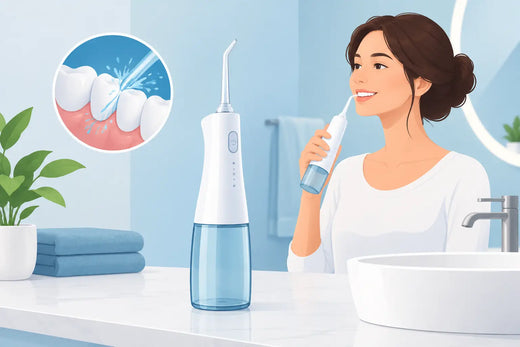
To complement oral hygiene and help limit bad breath, a water flosser with tongue scraper helps remove debris between the teeth. These solutions fit into a routine adapted to residents, as presented in our oral hygiene collection for nursing homes.