Sommaire de l'article+
You probably don’t need a “smarter” toothbrush. What you really need is a brush that does the job well, quickly, and without requiring heroic motivation morning and night. This is exactly where the difference between electric and sonic toothbrushes becomes useful—not as a technical detail, but as a real factor in comfort, effectiveness, and consistency.
The problem is that many comparisons mix everything up. They put “electric” on one side and “sonic” on the other, as if they were two completely separate worlds. In reality, a sonic brush is an electric brush. The real question is more precise: what movement technology, what sensation in the mouth, and what concrete daily result?
Difference between electric and sonic toothbrushes: the real distinction
A classic electric toothbrush usually works with a small round head that oscillates, rotates, or pulses to clean tooth by tooth. This is the most well-known format. It requires slowly guiding the brush over each surface, taking the time to cover every area.
A sonic toothbrush, on the other hand, uses very high-frequency vibrations. The head or brushing surface moves much faster, with a finer amplitude. The result: you don’t just feel mechanical friction, but also a vibratory action that helps loosen dental plaque, including in hard-to-reach areas.
In other words, the difference isn’t “electric versus modern.” It’s in the way it cleans. Classic electric often works by targeted contact, tooth after tooth. Sonic relies on a high frequency, wider coverage, and a gentler sensation for many users.

Rejoignez le club !
Obtenez des conseils personnalisés pour une meilleure hygiène dentaire
How this translates in the bathroom
On paper, technology matters. In front of the mirror, what really matters is your user experience. An oscillating-rotating brush often gives a very noticeable cleaning sensation, almost “polishing.” Some people love it. Others find it more aggressive, especially if they have sensitive gums or a heavy hand.
Sonic generally offers a smoother feel. The noise is different, the vibration too. You feel less like you’re scrubbing hard, but that doesn’t mean it cleans less. On the contrary, many users find it more comfortable over time, which changes a key point: they use it correctly and more regularly.
This is often where real performance is decided. A technology can be excellent in the lab. If it annoys you, makes you cut brushing short, or avoid certain areas, the final result inevitably suffers.
Classic electric: effective but more dependent on technique
The traditional electric brush has a clear advantage: it’s well-known, easy to understand, and widely adopted. Its small round head allows precise cleaning, especially if you’re already comfortable with methodical brushing. For very thorough people, it’s a serious solution.
But this precision comes at a cost: time and attention. You have to move the head tooth by tooth, outer surface, inner surface, chewing surfaces, without forgetting areas near the gums. Sticking to the recommended 2 minutes is already difficult for many. Actually completing them without rushing the end is even harder.
This isn’t an absolute flaw of the technology. It’s a matter of adherence. The more a routine demands discipline, the more it risks deteriorating with busy days, travel, or fatigue.
Why sonic is increasingly popular
The sonic brush addresses this friction precisely. Its high frequency allows quick, even, and often more pleasant cleaning. For a busy user, it’s not a gimmick. It’s a lever for consistency.
It’s also appealing for those seeking gentler brushing. The vibratory sensation sometimes limits the urge to press too hard, which can help protect the gums. Again, it depends on the model and how it’s used, but sonic is often seen as more forgiving.
Another concrete point: coverage. Depending on the head design, a sonic brush can clean a larger surface with fewer passes. This is especially relevant for users who want an effective routine without turning every brushing session into a timed operation.
The question everyone asks: which cleans better?
The honest answer is less spectacular than slogans. Both can clean very well if used properly. But in real life, the best brush isn’t just the one with the best specs. It’s the one that helps you stick to the routine, with the right technique, all the way through.
For a very diligent user, a classic electric can deliver excellent results. For a rushed, distracted, or impatient user, sonic often has a clear practical advantage. It makes brushing easier, reduces mental friction, and makes brushing less of a chore.
That’s why the debate isn’t just about power. You have to look at useful effectiveness, the kind that lasts. A more pleasant and faster brush can end up performing better daily than a theoretically excellent model that’s poorly used.
Difference between electric and sonic toothbrushes according to your profile
If you like to precisely control each area and already have a solid routine, classic electric remains a good choice. It also suits those who prefer a very direct cleaning sensation.
If you have sensitive gums, find 2 minutes long, or want a simpler routine to maintain while traveling, before work, or managing kids, sonic often becomes more relevant. It simplifies the motion and reduces the risk of rushing.
For families, this is even more obvious. The quicker and easier the brushing is to understand, the less negotiation it causes. When the routine becomes almost automatic, the chances of doing it properly immediately increase.
What about ultra-fast formats?
This is where the topic gets really interesting. For a long time, the market contrasted manual brushes, rotating electric, and sonic. Today, some sonic formats go further by rethinking not only vibration but also the brushing method.
Instead of cleaning tooth by tooth, they focus on brushing several surfaces simultaneously. The idea is simple: if you can cover more teeth at once, you greatly reduce routine time without sacrificing cleaning quality. This isn’t an abstract promise. It’s a direct response to a widespread behavior: most people don’t actually reach the recommended brushing time.
In this logic, technology isn’t just there to “help” brushing. It compensates for the most common human limits—lack of time, patience, and consistency. It’s a very pragmatic approach, and it’s also why brands like Y-Brush have found their place: by turning a chore into a quick, clear, and measurable action.
What to look for before buying
Don’t stop at the word “electric” or “sonic” on the box. Look at the mouthfeel, actual brushing time, ease of use, battery life, and maintenance cost. A good brush isn’t just effective on day one. It must remain easy to live with six months later.
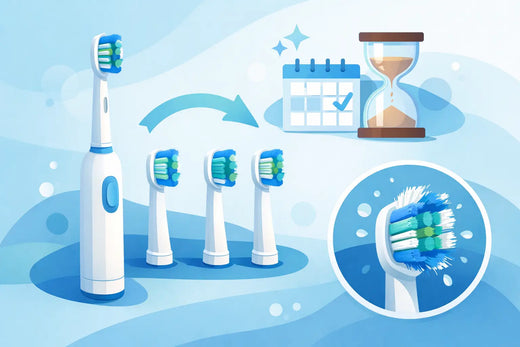
Replacing heads also matters. If it’s complicated, expensive, or easy to forget, performance declines over time. The same goes for bulkiness, especially if you travel often. An effective oral care routine rarely relies on a single technical feature. It depends on a set of practical details.
Finally, keep a simple idea in mind: the easier the method is to repeat with your eyes closed, the more likely it is to last. And in oral hygiene, duration often beats intention.
Choosing between classic electric and sonic isn’t about picking the most “high-tech.” It’s about choosing the format that gives you the best chance to brush your teeth well tomorrow morning, even if you’re already running late.