Sommaire de l'article+
Oral hygiene in nursing homes is an often underestimated pillar of health: poor oral care in a dependent older person increases the risk of pain, infections, malnutrition and even pneumonia. For caregivers, support workers and families, knowing the right techniques helps preserve residents' comfort, nutrition and dignity. This guide covers the challenges specific to care facilities and practical solutions for successful daily brushing.
key takeaways
- A healthy mouth protects the whole body: it limits infections, preserves nutrition and reduces the risk of malnutrition.
- In nursing homes, lack of time, cognitive impairment and dependence make brushing more complex, but never impossible.
- A simple, consistent routine twice a day remains the foundation of successful oral hygiene in a care facility.
- Suitable tools that are faster and gentler help overcome care refusal and staff fatigue.
Why oral hygiene is a major concern in nursing homes
With age, the mouth becomes more fragile: worn enamel, sensitive gums, reduced saliva production and dentures that need care. In dependent older people, neglected brushing quickly promotes cavities, gingivitis and fungal infections.
Poor oral hygiene is recognized as a risk factor for malnutrition, because eating becomes painful, and for aspiration pneumonia, when oral bacteria enter the airways. Caring for residents' mouths means taking action for their overall health and quality of life.
Challenges specific to life in a care facility
Oral care in nursing homes faces well-known constraints. Time per resident is limited, while brushing a dependent person's teeth requires patience and availability. Cognitive impairment, particularly in people with Alzheimer's disease, can lead to care refusal or difficulty understanding the procedure.

Rejoignez le club !
Obtenez des conseils personnalisés pour une meilleure hygiène dentaire
Physical dependence also makes the task more difficult: residents may be bedridden, have limited mobility or struggle to spit or rinse. Teams may also sometimes lack training in oral hygiene, which has long been considered secondary. Recognizing these challenges is the first step toward overcoming them.
Best practices for an oral hygiene routine
A rigorous nursing home oral hygiene routine is based on simple, consistent principles, where regularity in daily care matters more than perfection. For care teams, a detailed nursing home oral care protocol specifies the frequency, individual equipment and documentation of each procedure.
Brushing twice a day
Morning and evening, with fluoride toothpaste, paying particular attention to the junction between the teeth and gums. Short but daily brushing is better than long and infrequent brushing.
Denture care
Dentures should be cleaned every day and removed at night to let the mouth rest and reduce irritation.
Monitoring the mouth
Regular visual checks help identify redness, a sore or pain early and alert the dentist.
To take things further, Y-Brush has designed a range for care facilities and dependent people, brought together in its collection dedicated to nursing homes. Its Y-shaped brush cleans both sides of the teeth at the same time, significantly reducing brushing time.
Special situations to be aware of
Some residents require specific attention. For people with Alzheimer's disease, it is helpful to use reassuring techniques and choose a calm time to avoid refusal. For a highly dependent or bedridden person, positioning and head placement make care easier.
Denture wearers need daily care for their appliance as well as their gums. Finally, dry mouth, which is common with age and certain medications, increases the risk of cavities. Each of these situations is covered in detail in the articles in the nursing home content cluster.
Simplifying daily brushing
When time is limited and fatigue sets in, a fast and gentle tool can make all the difference. Y-Brush's Y-shaped sonic toothbrush cleans the teeth in about ten seconds per jaw using soft silicone bristles. It is 2× more efficient than traditional electric toothbrushes, according to tests conducted by Y-Brush.
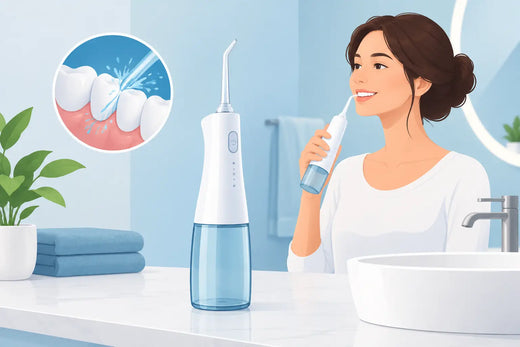
For a first setup, the Y-Brush Essential sonic toothbrush is easy to use. Cleaning can be complemented by the Hydro-Go water flosser for interdental spaces, while the toothpaste applicator helps dispense the right amount. This performance, 2× more efficient than traditional electric toothbrushes, is documented in the brand's clinical studies, which is reassuring for families.